Skip to content
[ The science ]

Every number in the app has a source.

Your calorie ring, your macro targets, your breathing sessions — none of it is guesswork. This page explains the published research behind what Ohga measures, how the engine turns that research into daily guidance, and where every formula comes from.

32
Peer-reviewed references
14+
Nutrients tracked per meal
12+
Guided breathing techniques
470+
Exercises with MET values
[ Part 1 · Energy Engine ]

The calorie ring that recalculates all day

Open Ohga and the first thing you see is your energy budget for today. That number is not fixed — it shifts as you eat, train, and recover, because the engine underneath recalculates your needs in real time using evidence-based metabolic science. Here is how it works.

Steaming breakfast bowl held in two hands — food as daily fuel

Basal Metabolic Rate

The foundation of your energy budget

Everything starts with Basal Metabolic Rate (BMR) — the calories your body burns at complete rest to maintain vital functions like breathing, circulation, and cellular repair. Ohga uses the Mifflin-St Jeor equation, widely regarded as the gold standard for predicting resting energy expenditure in healthy adults [1].

Unlike older formulas that rely on population averages, Mifflin-St Jeor accounts for your age, sex, height, and weight to produce a personalized baseline. Ohga applies this baseline as the anchor of your daily energy budget, then layers activity and intake data on top — so your targets reflect your body, not a generic calculator.

Adaptive Energy Expenditure

Traditional apps estimate Total Daily Energy Expenditure (TDEE) once using a static activity multiplier — sedentary, lightly active, very active — and never revise it. That approach breaks down quickly: a rest day and a long training day do not burn the same energy, and a single multiplier cannot capture that difference.

Ohga treats TDEE as a living estimate. As you log meals, record workouts, and sync wearable activity data, the system recalibrates your expenditure throughout the day. Rest days lower your projected burn; high-activity days raise it. The result is an adaptive energy budget that tracks reality instead of a label you picked during onboarding [1, 2].

Exercise Energy Modeling

MET-Based Calorie Estimation

For structured exercise, Ohga draws on MET (Metabolic Equivalent of Task) values from the Compendium of Physical Activities — a peer-reviewed catalog that assigns energy cost to hundreds of activities, from walking and cycling to strength training and yoga [2]. MET values express exercise intensity relative to resting metabolism, enabling accurate calorie estimates even when heart rate data is unavailable.

RPE Integration

Not every workout feels the same. Ohga incorporates Rate of Perceived Exertion (RPE) — your subjective sense of effort on a 1–10 scale — to refine calorie estimates when intensity varies within a session. A moderate run logged at RPE 6 burns differently than the same distance at RPE 9, and Ohga adjusts accordingly.

EPOC and Post-Exercise Burn

High-intensity exercise does not stop costing energy when you stop moving. Excess Post-exercise Oxygen Consumption (EPOC) — sometimes called the "afterburn effect" — describes the elevated metabolic rate that persists for hours after vigorous activity [3]. Ohga models EPOC based on workout intensity and duration, adding post-exercise burn to your daily expenditure so recovery days account for yesterday's effort.

[ Part 2 · Nutrition Engine ]

What happens when you photograph your lunch

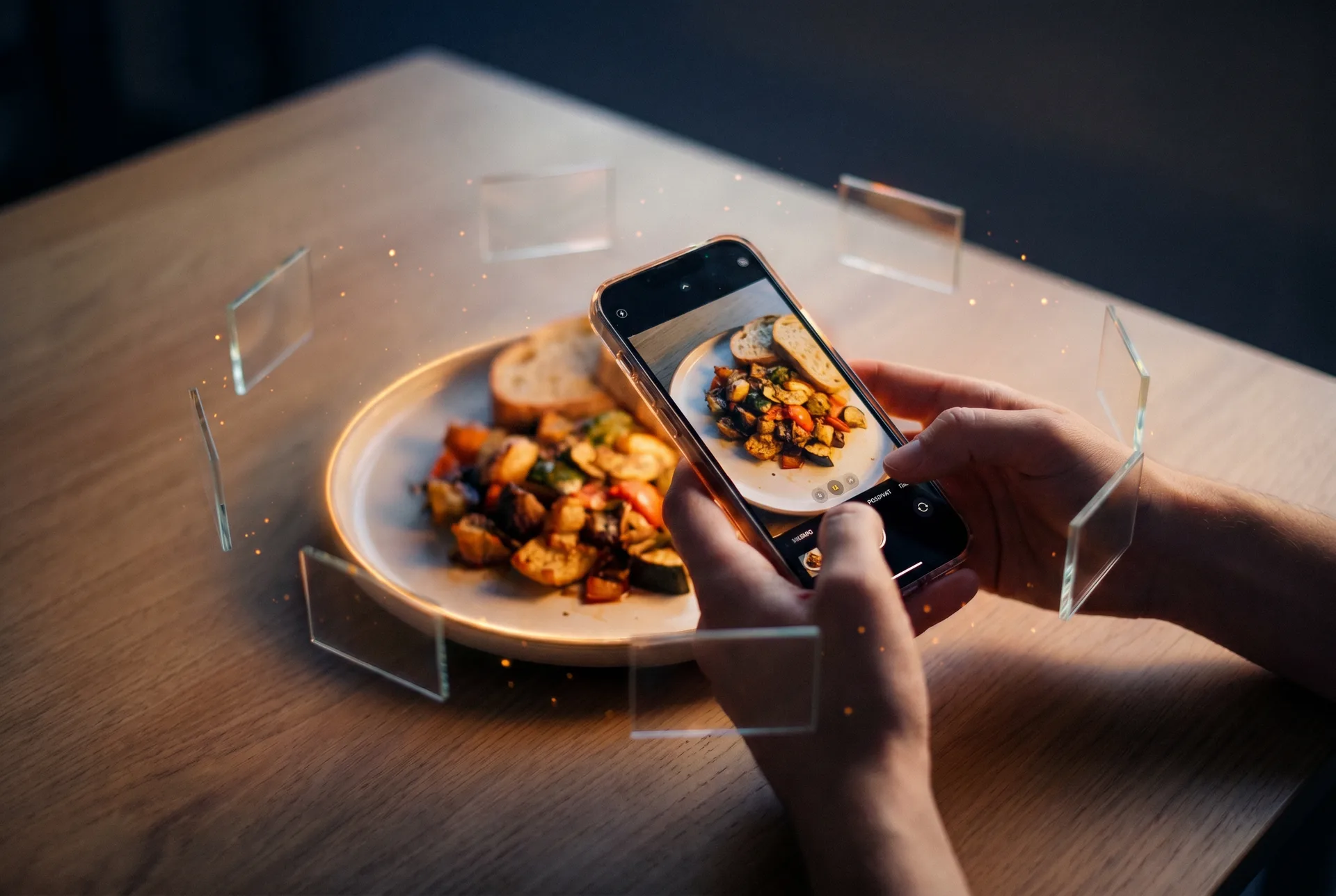
Snap a photo in Ohga and seconds later you have calories, macros, and 14+ nutrients for the whole plate. Counting calories alone tells you how much you ate, not whether you ate well — so the engine goes further, grounded in national dietary standards and AI-assisted food recognition.

Overhead photo of a meal being captured with a phone camera

Macro and Micronutrient Precision

Tracking what matters, not just how much

Ohga monitors 14+ nutrients including calories, protein, carbohydrates, fats, fiber, sugar, sodium, saturated fat, cholesterol, calcium, iron, vitamin C, and vitamin A. This breadth matters because macronutrients drive energy and satiety, while micronutrient gaps — even subtle ones — can affect immunity, bone health, and cognitive performance over time.

Recommended daily allowances in Ohga follow the Dietary Guidelines for Americans 2020–2025, the authoritative reference for nutrient intake targets across age and life stage [4]. Rather than arbitrary thresholds, your daily targets reflect evidence-based guidance used by clinicians and registered dietitians nationwide.

AI-Powered Food Recognition

Manual logging is accurate but slow. Ohga's AI food analysis uses computer vision to identify items from a photo, estimate portion sizes, and calculate macronutrients automatically. Deep learning models trained on large food image datasets can recognize diverse cuisines, mixed dishes, and variable plating — reducing the friction that causes most people to abandon food tracking within weeks [5].

The system does not replace your judgment: you can review, adjust portions, and correct identifications. But starting from an AI-generated estimate is far faster than searching a database item by item, which means more complete logs and more reliable nutrition insights over time.

Database Intelligence

For packaged foods, Ohga integrates with Open Food Facts — a free, open, community-verified database of nutrition information covering millions of products worldwide [6]. Scan a barcode and Ohga pulls verified nutrition data instantly, including ingredients, allergens, and Nutri-Score ratings where available.

Community verification means the database improves continuously as users submit corrections and new products. Combined with AI photo analysis for fresh and prepared foods, Ohga covers the full spectrum of how people actually eat — from grocery aisles to home-cooked meals.

Person resting on a sofa with a warm drink — calm evening recovery
[ Part 3 · Focus Science ]

When Ohga detects an afternoon dip, it offers a guided breathing reset. That is not a wellness gimmick: structured breathing and targeted sound frequencies are among the most accessible, evidence-supported tools for shifting your nervous system from stressed to calm, scattered to focused.

Guided Breathing Protocols

12+ techniques with distinct physiological targets

Ohga includes more than a dozen breathing protocols, each selected for a specific outcome:

Box breathing (4-4-4-4) — equal inhale, hold, exhale, and hold phases that stabilize autonomic arousal and improve attention under stress [7].

4-7-8 breathing — extended exhale relative to inhale that activates the parasympathetic nervous system, commonly used for sleep preparation and anxiety reduction [7, 14].

Physiological sigh — a double inhale followed by a long exhale, shown to rapidly reduce stress markers and restore calm within one to three cycles.

Coherent breathing — paced at roughly 5.5 breaths per minute with equal inhalation and exhalation, a rate demonstrated to maximize heart rate variability [10, 11].

Moon breathing (Chandra Bhedana) — left-nostril-dominant breathing that promotes parasympathetic activation and is used in yoga traditions for cooling and calming [14, 16].

Each protocol includes guided timing, visual cues, and session duration options so you can match the technique to the moment — a two-minute reset before a meeting, or a ten-minute wind-down before sleep.

HRV and Autonomic Balance

Heart Rate Variability (HRV) — the variation in time between consecutive heartbeats — is one of the most reliable non-invasive markers of autonomic nervous system function and overall resilience [9]. Higher vagally-mediated HRV reflects a nervous system that adapts well to stress and recovers efficiently.

Controlled breathing directly shifts HRV by engaging the vagus nerve. Slow, diaphragmatic breathing stimulates pulmonary stretch receptors and baroreceptors, sending "safety" signals to the brainstem that activate the parasympathetic "vagal brake" on heart rate [11, 14, 23]. Systematic reviews confirm that voluntary slow breathing significantly increases parasympathetic activity across diverse populations [11, 12, 16].

Ohga tracks HRV trends when synced with compatible wearables, helping you see how consistent breathing practice translates into measurable autonomic improvement over days and weeks — not just how you feel in the moment.

Binaural Beats and Brainwave Entrainment

Binaural beats occur when each ear receives a slightly different frequency, and the brain perceives the difference as a third tone. This auditory illusion can entrain brainwave activity toward specific frequency bands associated with distinct mental states [8].

Theta frequencies (4–8 Hz) are linked to deep relaxation, creative ideation, and meditative states. Alpha frequencies (8–14 Hz) correspond to calm alertness — relaxed but awake, ideal for focused work without the jitter of stimulants. Meta-analytic evidence supports binaural beats as a modest but reliable modulator of anxiety, attention, and pain perception [8].

Ohga pairs binaural beat sessions with breathing protocols so sound and respiration work together: coherent breathing to raise HRV while alpha entrainment supports sustained focus, or 4-7-8 breathing with theta frequencies for pre-sleep relaxation.

[ Part 4 · Behavior Engine ]

Why streaks, quests, and leagues actually change behavior

Tracking tells you what happened. Behavior change decides what happens next. The streaks, daily quests, and leagues in Ohga are not decoration on top of the data — each mechanic maps to published research on how habits form, why motivation lasts, and what makes repetition stick.

Habit Formation Science

Repetition in a stable context builds automaticity

The most cited real-world study of habit formation followed participants repeating a health behavior in a consistent context and found automaticity took a median of 66 days to plateau — with a range from 18 to 254 days depending on the person and the behavior [25]. The practical lesson is that habits are built by showing up repeatedly in the same context, not by bursts of intensity.

Ohga is designed around that finding. Daily quests keep the target behavior small enough to repeat, streaks make the repetition visible, and missing a single day does not erase progress — the research shows one skipped repetition has little effect on the overall curve [25, 26]. The app rewards returning, because returning is what forms the habit.

Motivation Architecture

Self-determination theory identifies three conditions under which motivation is sustained rather than burned through: autonomy (you chose the goal), competence (you can see yourself getting better), and relatedness (other people are in it with you) [29]. Reward systems that ignore these conditions produce short spikes of engagement followed by abandonment.

Ohga maps one mechanic to each condition. You pick your own quests and focus areas rather than receiving a fixed program (autonomy). Progressive difficulty and visible personal records show capability growing week over week (competence). Leagues and shared streaks with friends supply the social dimension (relatedness). A systematic review of gamification in health interventions found predominantly positive effects on health behavior when mechanics are tied to meaningful goals rather than points alone [28].

The Habit-Goal Interface

Research on the habit-goal interface shows that established habits are triggered by context cues — time of day, location, preceding action — rather than by conscious goals [27]. This is why New Year resolutions fail while a morning coffee routine survives decades: one depends on willpower, the other on context.

Ohga uses this by anchoring nudges to your actual routine. The hydration reminder arrives when you usually wake, the pre-workout fuel suggestion appears in your typical training window, and the wind-down cue lands at your observed bedtime. Over weeks, the cue-behavior pairing transfers from the notification to the context itself — the point at which the app can step back and the habit carries on its own [26, 27].

[ Part 5 · Recovery Engine ]

What last night's sleep decides about today

Sleep is where the other four engines meet. It shapes how much energy you have, how hungry you feel, how hard you can train, and how well you focus. Ohga reads sleep trends from your wearable and adjusts today's guidance before you open the app — here is the evidence that adjustment is built on.

Sleep Duration and Performance

Seven or more hours is the evidence-based floor

The American Academy of Sleep Medicine and the Sleep Research Society jointly recommend seven or more hours of sleep per night for healthy adults, based on a consensus review of the evidence linking shorter sleep to impaired attention, metabolic disruption, and reduced physical performance [30].

For training specifically, a systematic review of sleep and athletic performance found that sleep loss degrades sustained exercise performance, slows reaction time, and blunts the cognitive side of training — decision speed, motivation, and perceived exertion all suffer before strength does [31]. In practice this means a short night changes what a productive day looks like, and a good plan should change with it.

Wearable Sleep Tracking

Consumer wearables have become genuinely useful sleep instruments — with known limits. A comprehensive review of wearable sleep technology found that modern multi-sensor devices estimate sleep duration and timing well, while precise sleep staging remains less reliable than laboratory polysomnography [32].

Ohga works with those limits rather than against them. The engine weights the measures wearables capture accurately — duration, consistency, bedtime drift, and overnight heart rate — and reads them as multi-night trends instead of judging any single night. A one-off bad reading changes little; a week of shrinking sleep changes your targets.

Recovery-Aware Guidance

Recovery is where sleep data becomes action. After a short night, Ohga lowers the intensity of suggested training, shifts the focus toward technique or mobility work, and surfaces an earlier wind-down cue in the evening. After a strong week of sleep, the engine does the opposite — this is the same adaptive budgeting described in Part 1, extended to rest [30, 31].

The loop also runs forward. Evening wind-down recommendations draw on the breathing research in Part 3 — slow-paced protocols such as 4-7-8 are associated with parasympathetic activation that supports falling asleep [14, 16]. Sleep feeds the day, the day feeds sleep, and the engine keeps both sides of that exchange in view.

[ The loop ]

How research becomes your daily guidance

Every study on this page feeds one loop that runs all day in the app.

  1. We Measure

    Ohga combines your manual logs, AI-analyzed photos, wearable data from Apple Health, Health Connect, Fitbit, WHOOP, Oura, and Garmin, and behavioral patterns like streaks, check-in times, and workout frequency into a unified wellness profile.

  2. We Process

    The Wellness Intelligence engine connects every data point: what you ate affects your workout capacity, your workout intensity affects your recovery needs, your sleep quality shapes tomorrow's energy targets. Multi-agent AI processes these relationships simultaneously, not in silos.

  3. We Guide

    Instead of showing you a report at the end of the day, Ohga acts in the moment — nudging hydration in the morning, suggesting pre-workout fuel, guiding post-workout recovery, and adjusting evening wind-down recommendations based on everything that happened today.

See the engine work on your own data.

References:

  1. [1] Mifflin MD, St Jeor ST, Hill LA, Scott BJ, Daugherty SA, Koh YO. A new predictive equation for resting energy expenditure in healthy individuals. Am J Clin Nutr. 1990;51(2):241-247. https://doi.org/10.1093/ajcn/51.2.241
  2. [2] Ainsworth BE, Haskell WL, Herrmann SD, Meckes N, Bassett DR Jr, Tudor-Locke C, Greer JL, Vezina J, Whitt-Glover MC, Leon AS. 2011 Compendium of Physical Activities: a second update of codes and MET values. Med Sci Sports Exerc. 2011;43(8):1575-1581. https://doi.org/10.1249/MSS.0b013e31821ece12
  3. [3] LaForgia J, Withers RT, Gore CJ. Effects of exercise intensity and duration on the excess post-exercise oxygen consumption. J Sports Sci. 2006;24(12):1247-1264. https://doi.org/10.1080/02640410500506064
  4. [4] U.S. Department of Agriculture and U.S. Department of Health and Human Services. Dietary Guidelines for Americans 2020-2025. 9th Edition. December 2020. https://www.dietaryguidelines.gov/
  5. [5] Mezgec S, Seljak BK. NutriNet: A Deep Learning Food and Drink Image Recognition System for Dietary Assessment. Foods. 2017;6(4):72. https://doi.org/10.3390/foods6040072
  6. [6] Open Food Facts. Open Food Facts — Free and Open Food Products Database. 2024. https://world.openfoodfacts.org/
  7. [7] Ma X, Yue ZQ, Gong ZQ, Zhang H, Duan N, Shi YT, Wei GX, Li YF. The Effect of Diaphragmatic Breathing on Attention, Negative Affect and Stress in Healthy Adults. Front Psychol. 2017;8:874. https://doi.org/10.3389/fpsyg.2017.00909
  8. [8] Garcia-Argibay M, Santed MA, Reales JM. Efficacy of binaural auditory beats in cognition, anxiety, and pain perception: a meta-analysis. Psychol Res. 2019;83(3):357-372. https://doi.org/10.1007/s00426-018-1066-8
  9. [9] Laborde S, Mosley E, Thayer JF. Heart Rate Variability and Cardiac Vagal Tone in Psychophysiological Research: Recommendations for Experiment Planning, Data Analysis, and Data Reporting. Front Psychol. 2017;8:213. https://doi.org/10.3389/fpsyg.2017.00213
  10. [10] Lin IM, Tai LY, Fan SY. Breathing at a Rate of 5.5 Breaths per Minute with Equal Inhalation-to-Exhalation Ratio Increases Heart Rate Variability. Int J Psychophysiol. 2014;91(3):206-211. https://doi.org/10.1016/j.ijpsycho.2013.12.006
  11. [11] Laborde S, Allen MS, Borges U, Dosseville F, Hosang TJ, Iskra M, Mosley E, Borges U (duplicate author listing in source). Effects of Voluntary Slow Breathing on Heart Rate and Heart Rate Variability: A Systematic Review and a Meta-Analysis. Neurosci Biobehav Rev. 2022;138:104711. https://doi.org/10.1016/j.neubiorev.2021.104711
  12. [12] Chaitanya S, Datta A, Bhandari B, Sharma VK. Effect of Resonance Breathing on Heart Rate Variability and Cognitive Functions in Young Adults: A Randomised Controlled Study. Cureus. 2022;14(2):e22187. https://doi.org/10.7759/cureus.22187
  13. [13] De Couck M, Cserjesi R, Caers R, Zijlstra W, Widjaja D, Wolf N, Luminet O. How Breathing Can Help You Make Better Decisions: Two Studies on the Effects of Breathing Patterns on Heart Rate Variability and Decision-Making in the Context of Ancillary Information. Int J Psychophysiol. 2019;139:1-9. https://doi.org/10.1016/j.ijpsycho.2019.02.011
  14. [14] Zaccaro A, Piarulli A, Laurino M, Garbella E, Menicucci D, Neri B, Gemignani A. How Breath-Control Can Change Your Life: A Systematic Review on Psycho-Physiological Correlates of Slow Breathing. Front Hum Neurosci. 2018;12:353. https://doi.org/10.3389/fnhum.2018.00353
  15. [15] Steffen PR, Hedges D, Matheson R. Integrating Breathing Techniques Into Psychotherapy to Improve HRV: Which Approach Is Best? Front Psychol. 2021;12:624254. https://doi.org/10.3389/fpsyg.2021.624254
  16. [16] Magnon V, Dutheil F, Vallet GT. Benefits from One Session of Deep and Slow Breathing on Vagal Tone and Anxiety in Young and Older Adults. Sci Rep. 2021;11(1):19267. https://doi.org/10.1038/s41598-021-98736-9
  17. [17] Dallam GM, Kies B. The Effect of Nasal Breathing Versus Oral and Oronasal Breathing During Exercise: A Review. J Sports Res. 2020;7:1-10. https://doi.org/10.18488/journal.90.2020.71.1.10
  18. [18] Swift AC, Campbell IT, McKown T. Oronasal Obstruction, Lung Volumes, and Arterial Oxygenation. Lancet. 1988 Jan 16;1(8577):73-75. https://doi.org/10.1016/S0140-6736(88)90282-6
  19. [19] Lundberg JO, Weitzberg E. Nasal Nitric Oxide in Man. Thorax. 1999 Oct;54(10):947-952. https://doi.org/10.1136/thx.54.10.947
  20. [20] Dallam GM, McClaran SR, Cox DG, Foust CP. Effect of Nasal Versus Oral Breathing on VO2max and Physiological Economy in Recreational Runners Following an Extended Period Spent Using Nasally Restricted Breathing. Int J Kinesiol Sports Sci. 2018;6(2):22-29. https://doi.org/10.7575/aiac.ijkss.v.6n.2p.22
  21. [21] Watso JC, Cuba JN, Boutwell SL, Moss JE, Bowerfind AK, Fernandez IM, Cassette JM, May AM, Kirk KF. Acute Nasal Breathing Lowers Diastolic Blood Pressure and Increases Parasympathetic Contributions to Heart Rate Variability in Young Adults. Am J Physiol Regul Integr Comp Physiol. 2023;325(6):R797-R808. https://doi.org/10.1152/ajpregu.00148.2023
  22. [22] Chaaban M, Corey JP. Assessing Nasal Air Flow: Options and Utility. Proc Am Thorac Soc. 2011;8(1):70-78. https://doi.org/10.1513/pats.201005-034RN
  23. [23] Porges SW. The Polyvagal Perspective. Biol Psychol. 2007;74(2):116–143. https://doi.org/10.1016/j.biopsycho.2006.06.009
  24. [24] Eser P, Calamai P, Kalberer A, Stuetz L, Huber S, Kaesermann D, Guler S, Wilhelm M. Improved Exercise Ventilatory Efficiency with Nasal Compared to Oral Breathing in Cardiac Patients. Front Physiol. 2024;15:1380562. https://doi.org/10.3389/fphys.2024.1380562
  25. [25] Lally P, van Jaarsveld CHM, Potts HWW, Wardle J. How Are Habits Formed: Modelling Habit Formation in the Real World. Eur J Soc Psychol. 2010;40(6):998-1009. https://doi.org/10.1002/ejsp.674
  26. [26] Gardner B, Lally P, Wardle J. Making Health Habitual: The Psychology of 'Habit-Formation' and General Practice. Br J Gen Pract. 2012;62(605):664-666. https://doi.org/10.3399/bjgp12X659466
  27. [27] Wood W, Neal DT. A New Look at Habits and the Habit-Goal Interface. Psychol Rev. 2007;114(4):843-863. https://doi.org/10.1037/0033-295X.114.4.843
  28. [28] Johnson D, Deterding S, Kuhn KA, Staneva A, Stoyanov S, Hides L. Gamification for Health and Wellbeing: A Systematic Review of the Literature. Internet Interv. 2016;6:89-106. https://doi.org/10.1016/j.invent.2016.10.002
  29. [29] Ryan RM, Deci EL. Self-Determination Theory and the Facilitation of Intrinsic Motivation, Social Development, and Well-Being. Am Psychol. 2000;55(1):68-78. https://doi.org/10.1037/0003-066X.55.1.68
  30. [30] Watson NF, Badr MS, Belenky G, et al. Recommended Amount of Sleep for a Healthy Adult: A Joint Consensus Statement of the American Academy of Sleep Medicine and Sleep Research Society. Sleep. 2015;38(6):843-844. https://doi.org/10.5665/sleep.4716
  31. [31] Fullagar HH, Skorski S, Duffield R, Hammes D, Coutts AJ, Meyer T. Sleep and Athletic Performance: The Effects of Sleep Loss on Exercise Performance, and Physiological and Cognitive Responses to Exercise. Sports Med. 2015;45(2):161-186. https://doi.org/10.1007/s40279-014-0260-0
  32. [32] de Zambotti M, Cellini N, Goldstone A, Colrain IM, Baker FC. Wearable Sleep Technology in Clinical and Research Settings. Med Sci Sports Exerc. 2019;51(7):1538-1557. https://doi.org/10.1249/MSS.0000000000001947